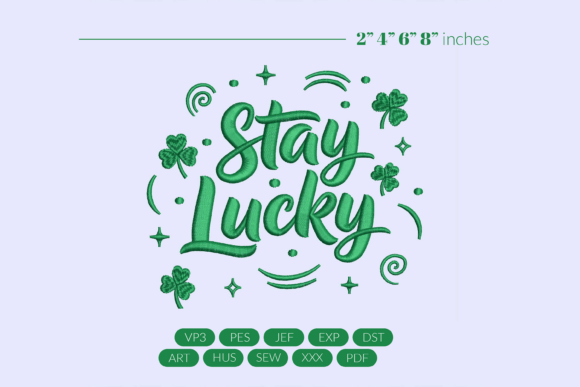
Powered by Luck Embroidery Design Review for Craft Fairs
First Impressions: A Booth Magnet for March Market Season
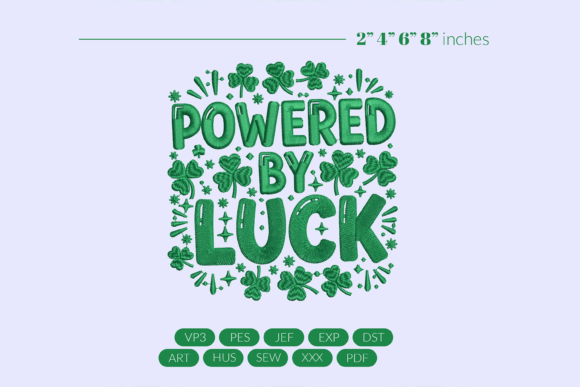
As an embroidery designer who sets up tables at weekend craft fairs and maker markets, I know that not every design earns its spot in the limited booth space. When I opened the Powered by Luck Embroidery Design file, I immediately saw how it could anchor a St. Patrick’s Day collection that feels fresh, not just another clover overload. The phrase “Powered By Luck” carries a sassy, confident tone — it’s not purely sweet or nostalgic, it’s playful, and that matters for impulse buyers browsing handmade products.
At a craft fair, shoppers scan quickly. A design needs to read its message in about two seconds. The bold typography surrounded by shamrock elements gives this one instant recognition. You don’t want people squinting to understand what’s stitched on a tote bag hanging from a rack. This design promises clarity, and I can already imagine it on a moss-green apron or an oatmeal tea towel, catching the eye of someone who loves statement pieces.
The Mood and Marketability: More Than Just a Holiday Design
Many St Patrick S Day embroidery designs lean hard into leprechauns or rainbows. This one, however, walks a line between festive and everyday wear. The “Powered By Luck” text gives it a trendy DIY feel — it’s perfect for someone who wants to make a quick zipper pouch or a patch for a denim jacket and still wear it beyond March 17th. I appreciate that kind of versatility because it increases the perceived value for a customer at a handmade market.
The shamrock elements frame the text without overpowering it. This balanced composition means the design works as a focal point on the center of a tee, but also looks equally strong on a cap front or a small fabric pouch. In my booth tests, designs that combine a short phrase with decorative borders tend to perform better as craft fair product options because they look “planned” and intentional, never like an afterthought.
Choosing the Right Products for Your Booth Display
When I plan my craft fair inventory around a single machine embroidery design, I think about high-traffic items that grab attention and affordable add-ons that pad the sale. For the Powered by Luck Embroidery Design, this is my go-to list of products I’d stitch out and arrange together on the table:
- Tote bags – A sturdy canvas tote in natural or emerald green becomes a walking billboard. The design screams “I’m fun” and tote bags sell fast under $25.
- Tea towels – Linen or flour sack towels add a farmhouse-meets-modern vibe. Roll them, tie with twine, and they become a giftable home accent.
- Aprons – I love stitching this design on a bib apron for a food stall owner or home cook. It sparks conversation and feels like a power statement.
- Embroidered patches – Create a small batch of patches and pin them to a display board. Gen Z and millennial shoppers use patches on jackets, bags, and hats, making them high-margin, low-effort add-ons.
- Fabric pouches – A zipper pouch with “Powered By Luck” is a fantastic purse organizer or a gift for a lucky charm lover.
- Pillow covers – A 16x16-inch throw pillow cover with this design adds seasonal flair to a couch, and buyers at maker fairs love home décor that’s easy to swap.
My rule for a successful booth is to have one hero product and several smaller grab-and-go items. Here, the apron embroidery or a full-front tote bag design becomes the hero, while patches and tea towels act as lower-priced entry points that ease customers into buying.
Production and Practical Embroidery Considerations
Before I load the embroidery file onto my machine, I always check a few technical aspects that affect how the design stitches out on real fabric texture and thicknesses. The Powered by Luck Embroidery Design likely includes small shamrock details and lettering with varying stroke widths. That means I will:
- Test the design on a piece of scrap fabric identical to my final blank. I never skip this, because what looks crisp on the screen can misbehave on a textured towel or a curved cap surface.
- Review stitch density around the shamrock leaves. If the fill is too dense, it can create a stiff patch that puckers the fabric. I look for clean coverage without over‑perforating the material.
- Choose the right stabilizer. For towels and stretchy tees, a cutaway stabilizer is a must. For patches, I use a firm tear‑away and add a heat‑seal backing later.
- Check hoop size compatibility. I always ensure the design fits comfortably within my most‑used hoops, such as 4x4 or 5x7, because I need to batch projects efficiently. If a design pushes close to the hoop edges, registration can shift on dense dense stitch areas.
Thread Color Selection and Fabric Pairings
The magic of this design appears when you nail the contrast. I’d go for a deep kelly green for the shamrocks, a white or gold for the lettering, and maybe a subtle grey outline to add dimension. Against a dark fabric like black or navy, the design pops dramatically and gives a sleek, urban feel — perfect for a cap or a backpack. Against lighter blanks like cream or soft mint, the same stitch‑out feels breezy and seasonal. I always make a note to order extra thread cones of the hero colors before running multiple pieces; there is nothing worse than running out of the exact green on a Saturday morning before the market opens.
For tea towel embroidery, I tend to reduce stitch density slightly in my machine settings if the design contains large fill areas. Waffle and textured towels can swallow fine details, so a bolder version of the design might require a careful stitch‑out test first. I also keep an eye on small lettering. The phrase “Powered By Luck” has several short words, and if the file compresses letters too tightly, the loops of ‘e’ and ‘a’ can close up. I’d run the design once on a smooth quilting cotton to verify readability before committing to a full production run.
How to Stage and Photograph the Finished Products
If you sell both offline at fairs and online as an Etsy seller, photography makes or breaks the listing. For this design, I create at least one printable mockup and one real stitched sample. A flat lay of a finished tote bag with a few clovers, a lucky coin, or a green ribbon helps shoppers imagine the product in their lives. The design photographs well because the text is direct and the shamrock border frames the shot naturally.
I also hang the product on a simple wooden hanger against a white wall to simulate how it might look in a boutique. That single image often becomes my best seller on Etsy — it gives that “small shop product” feeling without distracting background clutter. Good photos also work as booth signage. I print a large version of the design on foam board and set it next to the actual embroidered samples, so passersby can see the crisp detail even from across the aisle.
Avoiding Stitch Pitfalls and Customer Complaints
One thing I’ve learned the hard way: customers rarely forgive sloppy stitching on a product they bought as a gift. With the Powered by Luck Embroidery Design, watch for a few trouble spots:
- Tiny details in shamrocks – If the shamrock leaves have thin stems, they can warp on stretchy fabric or fluffy towels. Always use a topper on plush surfaces.
- Curved cap surfaces – If you plan to stitch this on a baseball cap, make sure the design is properly centered and digitized for a curved field. Flat embroidery files might distort on the cap’s crown, especially if the design is wide.
- Dark fabric challenges – On a black apron, the green shamrocks might look muddy if you don’t boost thread contrast. I often stitch a white underlay or choose a slightly brighter shade of green to compensate.
- Small lettering – At sizes below 4 inches wide, the “Powered By” text could become unreadable. I stick to a minimum width of around 4.5 inches for best results. If you need something smaller, consider isolating just the shamrock cluster as a mini accent.
Before offering the design on a new product, I always create one real mockup and wash it according to care instructions. This reveals any thread bleeding, shrinkage, or stabilizer ghosting. I would rather lose one sample than deal with a bad review from a buyer whose tea towel frayed after the first wash.
Commercial Licensing and Shop Branding
As a small shop product creator, I verify that the digital embroidery file I purchased comes with a clear commercial embroidery license that allows me to sell finished handmade products. Many craft fair sellers overlook this step, but it protects you if a design house audits your listings. The Powered by Luck Embroidery Design, like any item I source, must be approved for physical product sales. I print the license info and keep it in my records folder, just in case.
I also think about branding. If I stitch this design on a pouch, I add a tiny woven label with my shop name inside, or I attach a hang tag that matches the display theme. Little touches like a “handmade with luck” tag tied to the zipper pull make the item feel collectible, not mass‑produced. And when your products carry that kind of perceived value, customers are happy to pay a premium.
Final Thoughts: A Smart Pick for Festive Booth Inventory
Overall, the Powered by Luck Embroidery Design earns a spot in my craft fair lineup because it balances bold personality with clean embroidery structure. It doesn’t try to do too much — a short, catchy phrase and recognizable festive elements — and that restraint makes it suitable for a wide range of finished product shapes. I can batch‑produce it on multiple blanks, the design’s theme appeals to both St. Patrick’s Day shoppers and anyone who loves a quirky confidence boost, and it photographs beautifully for an Etsy listing or a social media post.
As with any machine embroidery design, success comes down to proper testing, the right stabilizer, and an honest look at how the design behaves on your chosen fabric. But if you take the time to match fabric colors, optimize hoop size, and inspect those shamrock details, you’ll end up with a product that stops buyers in their tracks. From a hoodie for a spring market to a giftable tea towel, this design offers the kind of easy, confident style that makes someone smile — and that’s exactly what sells at a handmade table.