Vintage Camera Summer Embroidery Design Review
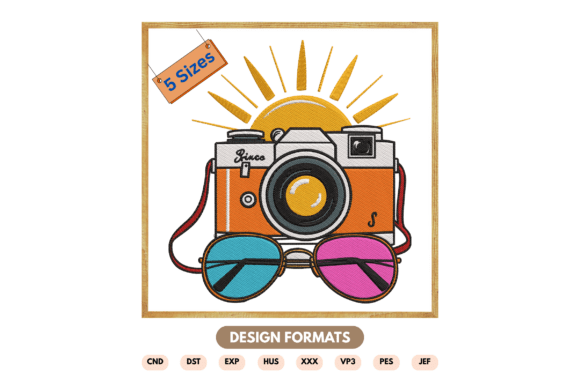
When I first opened the Vintage Camera Summer Embroidery Design from Creative Fabrica, I immediately felt a wave of nostalgia mixed with a playful summer energy. The composition centers on a retro camera, its rounded edges and vintage details giving it a timeless photographic feel. But what really caught my eye was the bold sun element behind it, complete with a pair of trendy sunglasses that inject a lighthearted, carefree personality. This is not a stiff, overly formal design. It reads like a sunny snapshot you would want stitched on a beach tote or a relaxed linen shirt. As an embroidery designer who regularly tests digital files for real customer orders, I look at a design and instantly picture it on a finished product. This one sparked several ideas right away.
My first instinct was that this machine embroidery design would shine on casual summer merchandise. The sunny motif and camera subject feel instantly recognizable, and that recognizability matters when you sell handmade items. A customer scrolling through Etsy listings or browsing a craft fair booth is drawn to designs that tell a small story or evoke a mood. This one says “cherished summer memories” without a single word. The details look promising: the camera lens has circular ring accents that would translate well into satin stitch, the sunglasses could use a smooth fill stitch to capture that glossy lens feel, and the sunbeams likely rely on clean running stitch lines to keep the design airy. The overall shape appears balanced, not too wide or too tall, which is something I always check before committing to a project.
First Impressions and Decorative Personality
The retro camera is the heart of the Vintage Camera Summer Embroidery Design, and it carries a hand-illustrated charm. The vintage details feel intentional, not overly complicated. This is important because overly detailed embroidery files can become dense, causing puckering on lightweight fabrics or making hooping a nightmare on small items. Here, the designer seems to have struck a good visual balance. The sunglasses sitting in front of the sun add a whimsical touch that softens the entire motif. It is not a serious photography emblem; it is a summer statement piece with warmth and humor. That personality makes it suitable for a wide age range, from kids' summer apparel to adult casual wear. I could see this working beautifully on a custom baby blanket for a summer-born child, or on a set of kitchen towels for a hostess gift with coastal vibes.
From a decorative standpoint, the design’s mood sits between quirky retro and modern minimalist. The sun and sunglasses trend has been popular in embroidery communities for a few seasons now, and pairing it with a vintage camera gives it a unique twist. It avoids feeling like yet another beach design. Instead, it leans into the idea of capturing moments, which is universally appealing. For small business owners focused on storytelling products, that thematic layer adds real value. It also photographs well for product listings. A crisp embroidered camera motif on a neutral tote bag immediately gives the viewer a sense of the item’s quality and intention. I can already picture the mockup photos for a shop.
Where This Design Naturally Fits in Real Projects
When I evaluate an embroidery file like this, I run through a mental checklist of the products I regularly create or get asked to customize. The Vintage Camera Summer Embroidery Design checked several boxes right away. Here is where I see it performing best in actual handmade production:
- Tote bag design – A natural fit. The camera motif centered on a canvas tote would look like a thoughtful piece of boutique merchandise. The sun and sunglasses keep it light, perfect for beach days or farmers’ market runs.
- Sweatshirt embroidery – Placed left chest or slightly oversized on the back of a crewneck, this design adds a vintage streetwear feel. On a faded terracotta or oatmeal sweatshirt, it would feel curated and cozy.
- Kitchen towels and aprons – Summer gatherings call for cheerful kitchen textiles. A small version stitched in the corner of a flour sack towel or across an apron bib would make a memorable hostess gift.
- Pillow covers and nursery decor – The playful style suits a child’s room or a sunroom accent pillow. The camera theme ties in well with a creative, exploratory nursery concept.
- Embroidered patch – With proper edging, this could be digitized as a standalone patch for denim jackets, backpacks, or caps. The compact motif shape is patch-friendly.
- Caps and curved surfaces – Small enough for cap fronts, though the sunbeam arms might need testing on curved cap profiles to avoid distortion. I would test placement carefully before listing it as a cap option.
- Etsy listings and craft fair products – The design is seasonally relevant without being limited to a single summer month. Cameras and sunshine sell well from May through early autumn, and the retro vibe extends its shelf life beyond typical seasonal trends.
- Printable mockups and digital embroidery file displays – Sellers who create digital product previews will find this design easy to style. Its clear shapes read well even in flat images.
Each of these applications brings a slightly different mood, but the design adapts. That versatility matters when you are building a product line around a cohesive Summer collection. You do not want every piece to feel identical; you want a thread of continuity. This camera motif can anchor that.
Practical Embroidery Performance Considerations
As much as I love the visual concept, my review would be incomplete without addressing how the Vintage Camera Summer Embroidery Design might behave during actual stitching. I always treat a new Creative Fabrica embroidery file as a test-drive candidate. Before running it on a final product, I create a series of stitch samples on scrap fabric that mirrors the final material. Here is what I pay attention to with a design like this:
Stitch density and small details. The camera lens rings and the sunglasses frames are areas where density can build up fast. If the stitch density is too high on those circles, the needle can perforate the fabric or create a stiff, raised patch that feels uncomfortable against skin. I always test on a medium-weight cotton first, then move to a textured or stretchy fabric only after confirming the file runs cleanly. Tiny details around the sunbeams should use efficient running stitch paths to avoid unnecessary bulk. From the preview, the design appears to use open space well, which suggests breathability. But I urge every embroiderer to run their own test before committing a customer’s sweatshirt or an expensive linen apron.
Hoop size and placement flexibility. The product description does not specify a precise hoop size, so I would strongly recommend checking the details on the Creative Fabrica product page before downloading. In my experience, camera motifs like this often fit comfortably in a 4x4 or 5x7 hoop, but you need to confirm. If the design exceeds your machine’s maximum embroidery area, you will face re-hooping challenges and registration headaches. For small business owners using single-needle machines, a comfortable hoop fit is non-negotiable. I would also test the design rotated slightly on a mockup to see if it still reads well off-center, which can open up more product placement options like pocket corners or sleeve embroidery.
Thread color contrast and fabric choices. A sunny design like this thrives on thoughtful color contrast. The camera body likely uses one or two solid thread colors, while the sun and sunglasses introduce brighter accents. I would test the Vintage Camera Summer Embroidery Design on both light and dark fabric mockups. On a natural linen or cream tote, the retro camera silhouette pops cleanly. On a dark navy or charcoal base, you may need to adjust thread colors to keep the sunglasses and sun readable. I often run a quick sample on black fabric just to see if the sunbeams disappear. That simple step saves me from poor product photos and disappointed customers later.
Stretchy and textured fabrics. If you plan to stitch this on a sweatshirt, baby onesie, or stretch knit apparel, the stabilizer choice becomes critical. A design with circular elements can distort if the fabric shifts during the satin stitch passes. I use a cutaway stabilizer for knits and add a water-soluble topper on textured fabrics like terry cloth or waffle weave to prevent stitches from sinking. The camera lens area especially benefits from a smooth foundation. On a plush baby blanket, those fine lens rings could lose definition without proper topping. I would not skip this step if the finished product is intended as a gift.
Wash durability for frequently laundered items. Kitchen towels, baby clothes, and everyday tote bags get washed often. I pay extra attention to how dense fill areas hold up after multiple cycles. The sunshine element in this design, if executed with a light fill stitch, should stay soft and pliable. But any heavy satin borders around the camera could become brittle over time if the density is excessive. I always wash my test stitch-out at least twice before listing a product made with a new design. That small investment builds buyer trust because you can honestly say the item has been wear-tested.
How the Design Elevates Product Value and Buyer Perception
A well-chosen machine embroidery design does more than decorate a blank. It communicates care and intention. When I stitch the Vintage Camera Summer Embroidery Design on a high-quality base good, the result feels like a small piece of art rather than just embellishment. That perception directly impacts pricing. A simple canvas tote becomes a boutique item. A cotton apron transforms into a curated gift. The retro camera subject has a timeless quality that does not scream “last season’s trend,” which means products made with it can remain relevant in your shop longer. For Etsy sellers and craft fair vendors, this staying power reduces the pressure to constantly refresh your entire catalog.
From a branding angle, this design supports a cohesive visual identity. If your shop focuses on sentimental summer goods, photographer gifts, or travel-inspired merchandise, the camera motif ties everything together. The sunglasses and sun add a friendly, approachable layer that broadens the audience. I could see this design attracting buyers looking for personalized gifts for a photographer friend, a summer birthday, or a graduation trip keepsake. The giftability factor is high because the imagery is universally positive without being niche. That means higher conversion potential during key shopping seasons like Mother’s Day, Father’s Day, and early summer wedding season.
Product photography also benefits. The distinct shapes photograph clearly, even in flat lay images. The contrast between the camera body silhouette and the radiating sunbeams creates visual interest that draws the eye in a crowded Etsy search page. When I style a product for listing photos, I look for designs that have enough detail to reward a close-up shot but also a strong overall silhouette for thumbnail views. This embroidery design delivers on both counts.
Pro Tips Before You Start Stitching
Over the years, I have learned that even the most beautiful embroidery file requires a thoughtful setup. Here are a few specific reminders I would give anyone preparing to use the Vintage Camera Summer Embroidery Design in a real project:
- Test on scrap fabric first. Even if the design preview looks flawless, your machine, thread tension, and hoop method are unique. A test stitch-out takes minutes and prevents ruined blanks.
- Check thread color contrast. The sunglasses and sunbeams need to stand out. If you are stitching on a warm-toned fabric, make sure the yellow or orange hues do not blend into the background. Sometimes a slightly brighter thread shade than the mockup shows works better in reality.
- Review stitch density. Open the file in your embroidery software and look at the stitch preview. Check for overly dense areas around the camera lens and sunglasses frames. If you can adjust density without compromising the look, do so.
- Confirm hoop size. Visit the Creative Fabrica product page and verify the exact dimensions. Do not assume the design will fit your go-to hoop. Measure twice, stitch once.
- Test on light and dark fabrics. The design’s readability can shift dramatically between a cream canvas and a black sweatshirt. Run a sample on both extremes to understand the visual range.
- Use proper stabilizer for your fabric type. Woven cotton needs a medium cutaway. Knits need a firm cutaway with a topper. Terry cloth needs a double layer of tear-away and a water-soluble topping. Do not skip the stabilizer strategy.
- Inspect small details after stitching. Look at the camera lens rings, the sunbeam tips, and the sunglasses frames with a critical eye. If any detail stitches out poorly, adjust your stabilizer or tension and test again before moving to a final product.
- Confirm file details and licensing on Creative Fabrica. I always read the product page thoroughly to understand included file formats and the commercial embroidery terms. While Creative Fabrica typically offers broad usage rights, each designer may have specific allowances for selling finished items. Protect your small business by verifying before you mass-produce anything for sale.
Final Thoughts from a Designer’s Worktable
After spending time analyzing the Vintage Camera Summer Embroidery Design, I can say it holds genuine appeal for anyone creating handmade summer products. It brings a balanced mix of nostalgia and playfulness, which is difficult to find in a single embroidery file. The retro camera gives it substance; the sun with sunglasses gives it whimsy. Together, they form a design that feels at home on a range of goods, from custom apparel and tote bag design pieces to nursery accents and seasonal gifts. It photographs well, resonates emotionally with buyers, and gives makers a versatile asset for their product collections.
From a production perspective, the design appears well thought-out, though every embroiderer should perform their own testing ritual. Pay attention to stitch density in the circular elements, test on your chosen fabric type, and never underestimate the power of the right stabilizer. The design has the potential to become a steady seller in a summer lineup, especially when paired with thoughtful presentation and solid craftsmanship. Whether you are a seasoned Etsy seller, a craft fair regular, or a creative entrepreneur building a boutique brand, this Creative Fabrica embroidery design is worth a close look. It may just become the motif that captures your customers’ summer memories stitch by stitch.