Tropical Coconut Drink Embroidery PNG: Craft Fair Review
When I opened the Tropical Coconut Drink Embroidery PNG on my screen, the first thing I felt was that sweet summer booth energy. For a maker who builds inventory around market weekends and small-shop ready-to-ship, a design like this isn’t just cute — it’s a magnet. I review dozens of digital assets every season, and this one landed in my file with a confident, drink-in-hand vibe that immediately connects with shoppers browsing handmade goods under warm festival lights.
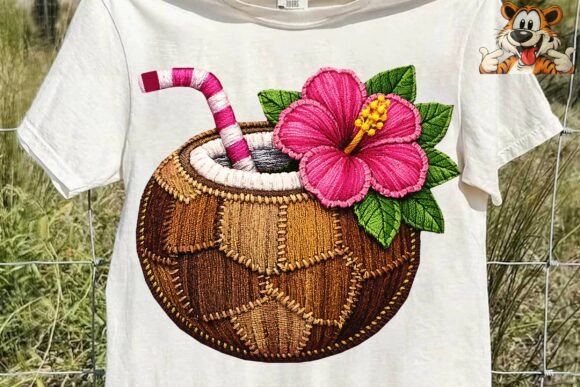
The artwork reads as bright, playful, and a little bit retro, with an easy tropical charm that doesn’t try too hard. Based on the high-resolution 300 DPI transparent PNG, I can see this becoming a repeat performer across several product types that embroiderers like me actually make for craft fairs. The visual clarity at first glance tells me the design translates well to thread, which is always the first hurdle. No confusing clutter, just a coconut drink shape that shouts vacation, relaxation, and giftable fun.
What This Design Brings to a Craft Fair Table
A booth has about three seconds to catch a passerby, and an embroidered piece featuring the Tropical Coconut Drink Embroidery PNG will do that loud and clear. The shape is instantly recognizable — a coconut with a straw, maybe a little umbrella or fruit garnish — and that familiarity pulls people closer. I’ve watched similar drink motifs grab attention on tote bags and tea towels from across the aisle. It’s not just a graphic; it’s a lifestyle statement. Customers gravitate toward designs that feel like a mini escape, especially during spring, summer, and even early fall markets when they’re thinking of warm getaways or patio parties.
The mood leans festive but not overdone. I wouldn’t call it rustic or elegant; it sits squarely in a cheerful, modern-vintage sweet spot. For the embroidered product line I’m building, that means easy pairing with bright linen, natural cotton canvas, and even soft pastel aprons. The design assets here, starting with the clean PNG, give me a transparent file I can drag right into my digitizing software and start mapping out thread paths. The illustration quality suggests smooth color blocking, which embroidery loves.
Top Products Where This Design Sells Best
From experience, not every graphic belongs on every item. The Tropical Coconut Drink Embroidery PNG, however, earns its spot across a surprising range. I’d test and build inventory in this order:
- Canvas Tote Bags — A large, centered stitch-out becomes the star of a reusable bag. Customers pick these up as beach bags, teacher gifts, and market totes. The coconut drink graphic says “I’m on island time” and feels elevated, not gimmicky.
- Kitchen Tea Towels — A favorite for hostess gifts. The embroidery shows up beautifully on flatweave cotton, especially when I use a bold contrast thread on a natural or white towel. It’s a small-format finish that sells at impulse-buy price points.
- Aprons — A corner placement or bib embroidery with this design turns a basic apron into a statement piece for home bartenders or grilling enthusiasts. I’d complement it with a simple “Sip Sip” or “Beach Please” lettering if the PNG doesn’t already include it, but even alone, the coconut cup is a conversation starter.
- Embroidered Patches — If I reduce the size and maintain stitch clarity, this becomes a sew-on or iron-on patch for denim jackets, hats, and backpacks. Patches are high-margin, small-footprint sellers at any fair.
- Small Fabric Pouches — A zipper pouch with this tropical motif sells for travel, makeup, or summer essentials. The design’s rounded shape works perfectly on a pouch front without fighting zipper hardware.
- Pillow Covers — For home decor buyers, a single-color or two-tone stitch-out on a pillow cover brings resort feels to a couch. I’d use it as a focal piece on a 16x16 or 18x18 cover.
- Hats and Caps — With careful placement on unstructured dad hats or curved brim caps, the design becomes a wearable mini vacation. I typically size down and pay close attention to the cap’s center seam.
- Market Bags — Lightweight, foldable shopping bags with a small embroidered accent near the handle make a thoughtful add-on at checkout.
For digital sellers, a finished mockup of these products using the Tropical Coconut Drink Embroidery PNG gives Etsy listings that sunny, handmade gloss that shoppers trust. The transparent background makes it easy to preview on different fabric colors before I ever commit thread to fabric.
Visual Appeal and Customer Attention
This design works because it’s both simple and evocative. The eye follows the curving shape of the coconut shell, then lands on the straw and any tiny accents. In embroidery, that natural flow reduces the chance of a design feeling stiff or heavy. The overall first impression is one of gentle movement and warmth, two qualities that soften a craft fair table. When I imagine a row of tea towels hanging in a booth, the Tropical Coconut Drink Embroidery PNG breaks up the usual floral and typography monotony without being obnoxious.
Shoppers notice the design because it touches on self-care and celebration. Someone picks up a towel, smiles, and immediately pictures a friend who loves piña coladas or backyard tiki parties. That emotional grab is what turns a browser into a buyer. The design adds a handcrafted premium feel because embroidery itself denotes effort, but the motif stays playful, so the finished product never feels overly formal. That balance is tough to find.
Photography and Etsy Listing Strength
I always think about how a design photographs before I stitch a single sample. The Tropical Coconut Drink Embroidery PNG, with its probable high-contrast areas and rounded silhouette, will pop in flat-lay images on a sunlit wooden table or bright tile background. Even a quick phone shot of a tote bag nestled in a beach chair or with a real coconut beside it creates that scroll-stopping story. For online shops, listing images can show the embroidery up close, highlighting stitch texture and thread sheen. Buyers love to see how the design sits on fabric grain; this one’s gentle curves will catch light beautifully.
I’d shoot a quick video of my machine stitching out the final details — that works wonders for Etsy SEO and conversion. The transparent PNG also lets me create clean, printable mockups for the listing before I have physical inventory, critical for testing demand without overstock. This approach keeps my small shop lean while I gauge interest in a tropical summer collection.
Production and Stitching Realities
Liking a design on the screen is one thing; stitching it profitably is another. Here’s where I put my embroidery brain to work. First, I check for dense fill areas. The coconut body likely has a solid or textured fill representing the husk. If that fill path isn’t balanced, I may see puckering on lightweight fabrics even with proper stabilizer. I’d test on a scrap of the same base material I plan to sell — cotton canvas, linen-cotton blend, or a quality poplin for tea towels.
Any tiny accent details, like umbrella ribs, small fruit slices, or lettering, need careful review. I’d examine the PNG at high zoom and consider whether those fine lines will hold at the finished embroidery size. For patches under 3 inches, I might simplify by manually tracing the design in my software to eliminate sections that could become thread blobs. If the art includes small lettering below a quarter inch, I’d enlarge the overall design or remove the words entirely — stitch clarity always wins over decorative clutter at craft fair distances.
The transparent background helps me visualize thread colors, but I also run a thread chart comparison against my stock. The tropical theme probably demands rich cream, green, warm brown, and a pop of pink or orange. I’d swatch those on the actual fabric because digital color is a liar. The wrong green, even slightly olive, kills the beach vibe.
Stabilizer choice is non-negotiable. For towels, I use a medium-weight cutaway. For totes, a tear-away or adhesive tear-away if the canvas is thick. For caps, I hoop with a mighty hoop and a water-soluble topping to flatten the nap. For dark fabrics, I always stitch a fill behind lighter thread areas to prevent show-through, which the digitizer (me) must plan. The design’s light areas against a dark tote could look dull unless I double-layer the fill.
I’d take notes on hoop size as well. A 5x7 hoop likely handles a standard tote application beautifully. If I want a larger statement on a pillow cover, I’d test a split hoop design or ensure my machine can accommodate the full size without re-hooping. Consistency is key when I’m running a batch of twenty tea towels two days before a fair.
Stitch Density and Small-Scale Challenges
With designs like this, the biggest risk is over-digitizing. A coconut cup doesn’t need a thousand stitches per square inch to look good; in fact, too much density makes the fabric stiff and uncomfortable on wearables. I start with a medium density and run a sew-out. The straw area and any liquid splashes are prime spots for thin, unconnected stitches that snag. I’d reinforce connections or combine overlapping elements into a single path to keep the design durable through washing.
When scaling down for patches or pouches, I consider minimum detail size. If the PNG has a tiny flower or leaf smaller than 2mm when reduced, I’d remove or enlarge that feature. I’d rather have a slightly simplified, consistent design than something that embroiders like a messy dot. The beauty of a well-chosen illustration is that its essence remains even with modest simplification.
Fabric Textures and Color Choices
Towels with terry loops and loose weaves can swallow small embroidery lines, so I always recommend a water-soluble topping and a heavier underlay for those surfaces. For the Tropical Coconut Drink Embroidery PNG, I’d test on a waffle weave kitchen towel because the bumpy texture adds a homemade feel but can distort a design that isn’t outlined clearly. I tend to add a light satin stitch border around the entire motif so it reads cleanly even on high-texture fabric.
Fabric color shifts the entire mood. On a natural linen apron, the design feels high-end and organic. On bright coral or turquoise canvas, it goes full-on vacation kitsch, which has its own strong fan base. I’d offer two colorway options at the fair — one warm-neutral and one punchy — and track which sells. The digital file from the description is a single PNG, so I must create my thread color palettes manually, but that’s actually an advantage because I control the outcome.
Craft Fair Booth Strategy with This Design
My typical booth layout benefits from visual anchors — a large embroidered pillow cover leans against a crate, a tote hangs high on a hook, and patches sit in open trays. The Tropical Coconut Drink Embroidery PNG creates a micro-collection I can call “Island Afternoon” or “Coconut Wishes.” Customers gravitate to themed sets; three matching tea towels in slightly different layouts, a matching apron, and a small pouch create an irresistible bundle. I’d price the set slightly below individual total, moving more units per transaction.
Because the PNG is licensed for commercial use, I can print hang tags or care cards with the design as a coordinating graphic without paying an additional fee. That consistent branding elevates my booth above scattered handmade tables. I’d even print a small vinyl decal of the coconut cup for my booth signage or price list — instant unity. The transparent background makes that simple.
Practical Designer Checklist Before Selling
Every time I add a new embroidery design to my production line, I walk through these steps:
- Run a full sew-out on the exact fabric type and color I’ll sell. I test at least three sizes: large for totes, medium for towels, small for patches. I note any thread breaks or tension issues.
- Check thread contrast. Hold the finished piece at arm’s length and under booth-type lighting. Does the design stand out against the background? Adjust thread shades if necessary.
- Review spacing and registration. If I digitized over the PNG, I confirm all elements align without gaps. A shifted straw looks cheap.
- Confirm hoop size. I mark my machine’s maximum stitch field and ensure the design doesn’t exceed it, or I split and multi-hoop carefully.
- Inspect stitch density. Press the fabric from the back; it shouldn’t feel like a stiff board. Dense fills waste thread and time.
- Use the right stabilizer. Test with cutaway, tear-away, or fusible depending on fabric stretch and use. No buyer wants a puckered coconut.
- Create a real final-product mockup. Photograph it, edit the listing, and put it live on Etsy or social media. A real stitched sample builds more trust than a digital preview alone.
- Compare fabric color options. I’ll produce one light, one dark, and one mid-tone base to see what sells best for this design.
- Confirm commercial embroidery licensing. The description states unlimited printing for commercial use, but always verify if that extends to digitizing and selling physical embroidery items crafted from the design. Most reputable shops grant a broad license, but I don’t assume. I reach out if needed.
Why This Design Earns a Spot in My Inventory
The Tropical Coconut Drink Embroidery PNG isn’t a one-note novelty. It’s the kind of file that stays relevant year after year because tropical themes cycle in predictably for summer markets, resort gift shops, bridal showers, and Christmas-in-July bazaars. The graphic’s file type — a transparent PNG at 300 DPI — makes it versatile even beyond embroidery. I can use it for sublimation mockups, printable tags, and coordinating DTG items, which means I can expand a small product line without purchasing multiple assets.
For the embroidery business owner tired of the same mason jars and farmhouse sayings, this coconut cup adds a fresh, fruit-forward note. It invites conversation. It photographs like a dream. And when a customer holds a finished tote in her hands, the embroidery texture against the fabric says “thoughtfully made.” That’s the exact feeling I want at my booth every single weekend.
I’m pulling up my digitizing software right now. The thread is loaded, the canvas is hooped, and I’m betting the Tropical Coconut Drink Embroidery PNG will be one of the first designs to sell out on my table when the sun comes out.