Smiley Face Flower Machine Embroidery Review
Every once in a while, an embroidery design lands on my stitch-out list that stops me mid-scroll. The Smiley Face Flower Machine Embroidery did exactly that. It’s not complex, not overloaded with color stops, and not trying too hard. What I saw was a clean, happy motif that immediately sparked four or five product ideas before I’d even opened the embroidery file.
I’ve been in this chair long enough to know that simple designs often carry the most weight for a small shop or a craft business. A face that smiles back at you from a tote bag or a baby onesie can sell faster than technically brilliant lacework nobody understands. So, I took this design through my usual pre-production thinking — the same kind of thinking I use before committing thread to a client’s order or my own craft fair stock.
First Impressions: A Little Joy Seed in Your Design Library
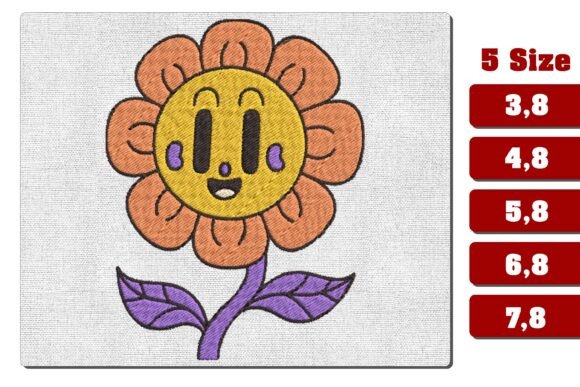
The moment I pulled up the preview, the mood was clear: approachable, cheerful, and just sentimental enough to matter. This isn’t a botanical flower. It’s a character. The smiley face nestled in the bloom turns a standard single flower into something with personality. The layout feels balanced, with the petals acting like a frame around that friendly center. The detail level sits right in the sweet spot — not so heavy that it becomes a dense bullet, and not so light that the expression gets lost.
As someone who has tested dozens of floral machine embroidery designs, I look for that instant “what can I put this on?” feeling. This one gave me a clear answer: gifts. Not mass-produced gifts, but handmade things that feel personal. A padded baby blanket. A kitchen towel set for a housewarming. A pocket accent on a children’s apron. That’s the visual personality the design brings — warmth without childishness, and simplicity without emptiness.
Coming from the Single Flowers category, this design fills a specific role. It’s not a sprawling bouquet. It stands alone, confident and complete, which makes it perfect for focal-point embroidery on smaller products. If you’re building a collection of standalone accent designs, this one deserves a spot.
Where This Design Belongs in Your Project Lineup
I think like a product developer most of the time. So when I evaluate any embroidery design, I run it through a shortlist of items I actually make and sell. For the Smiley Face Flower Machine Embroidery, the list shaped up fast.
- Tote bags: A natural first choice. On natural canvas, the design announces a sunny disposition without shouting. I’d use a soft gold or coral thread for the petals, and charcoal or dark brown for the face features.
- Baby and toddler apparel: This is where the multiple sizes matter. A tiny version on a bib or a medium one on a romper changes the product personality from cute to giftable. Parents eat up non-aggressive, happy motifs.
- Tea towels and kitchen textiles: A single smiley flower near the hem adds a boutique touch. I can already see it in a set of three, each with a different petal color, tied with a ribbon for a hostess gift.
- Embroidered patches: The shape is self-contained, no loose edges. Perfect for a sew-on or iron-on patch. I’d run it on felt with a tight satin stitch border and make a batch for a kids’ craft market.
- Caps and bucket hats: The curved surface challenges any design, but a centered single flower on a cap front panel can work beautifully if the hoop size allows and the design digitizing keeps the center from crushing in.
- Pillow covers and nursery decor: Soft pastel fabrics with this smiling bloom in a corner or a repeated pattern — that’s the kind of product that photographs well for an Etsy listing.
I also consider the commercial embroidery angle. For someone who sells finished goods, this design offers a quick turnaround. Because it’s likely a single-hoop, relatively fast stitch-out, you can produce multiples in a day without exhausting your machine — and without exhausting your thread budget. That matters when you price products for profit.
Stitching Reality: How It Translates to Fabric
I always test a design mentally before I ever hoop fabric. I look at the detail level, imagine the stitch types, and guess where things might go wrong. With the Smiley Face Flower Machine Embroidery, the likely construction is a combination of fill stitch for the petals, satin stitch for the smiley face, and running stitch for fine details like the eyes. That’s a reliable recipe if the density is right.
The smiley face features — two eye dots and a curved mouth — are tiny. That makes me think about stitch density immediately. On a dense fill behind them, the tiny satin stitches could sink or distort. My first move would be to test on a medium-weight cotton with a mid-weight cutaway stabilizer. If those small details hold crisp, the design earns a green light. If the mouth disappears or puckers, I’d adjust thread tension and possibly swap to a finer thread.
Color contrast is another check. The face must read against the petal color. A dark-stitched smile on a light petal works predictably. But on a dark petal, the face might need a contrasting color or even a tiny underlay of white. I’d recommend checking the design in a grayscale mockup to see if the expression holds up without color, because customers’ fabric choices vary wildly.
The fact that this design comes in multiple sizes is a huge practical advantage. It means I don’t have to force a large version onto a baby hat and risk distortion, or a small one onto a tote bag where it looks lost. I can pick the size that respects the product’s scale. That flexibility saves time and reduces waste — a big deal for any small business owner.
Fabrics and Surfaces: Where It Shines and Where to Be Careful
Not every design is universal. Even a friendly face can struggle on the wrong surface. Here’s my honest breakdown.
Recommended fabrics: medium-weight cotton, linen, canvas, denim (with care), twill, felt, and smooth-weave polyester blends. These hold the stitch definition well and don’t shift under the needle. For baby items, a soft interlock or jersey with a good knit-specific stabilizer and a basting stitch keeps the design from stretching out.
Use with caution: thin or sheer fabrics like voile or lightweight rayon. The tight fill stitch can create a stiff island that feels rough against skin and puckers the surrounding fabric. Stretchy athletic wear introduces distortion risk; I’d only attempt it with a heavy backing and a floating technique. Dark fabrics like black denim or navy canvas amplify any slight shadow under the smiley face — a small white underlay or a slightly higher stitch count for the face features might be needed.
Curved surfaces: caps and hats are always a judgment call. The smiley face at the center could end up sitting right on the cap’s front seam. If the seam is thick, the machine might push stitches out of registration. I’d want to test on a similar cap blank first, using a strong cap frame and a topper to prevent the flower details from blurring.
Layered garments: avoid placing this design over zippers, buttons, or thick seams. The clean circular layout loses all charm when interrupted by a lump. I’d position it proudly on a smooth front or back panel, letting the design breathe.
Product Value and Customer Trust
I’m always thinking about how a design affects the perceived value of a finished product. A customer who opens a box and finds a crisp, well-placed smiley flower embroidery on a linen towel or a baby onesie doesn’t just see a flower. They see care. They see a choice that wasn’t random. That small emotional connection builds trust and repeat business.
For Etsy sellers and craft fair makers, the Smiley Face Flower Machine Embroidery works as a branding element too. In a sea of laser-cut wooden signs and identical print-on-demand tees, a happy hand-stitched flower sets your products apart. It communicates personality. It tells the buyer, “This isn’t drop-shipped from a catalog.”
I’d also think about giftability. An embroidered tote with a giant smiley flower on the front sells itself as a pick-me-up present. Pair it with a matching tissue case or a key fob, and you suddenly have a small collection with a cohesive aesthetic. The design repeats well without feeling repetitive.
For commercial embroidery licensing, the description nods that you may use the design to create finished gifts. That’s generous. But I always flag the need to check the exact license terms before offering a physical product for sale or including it in a digital design asset pack. Terms do vary, and a quick clarification saves heartache. If the license permits small-batch use for sale, the design has a clear path to profit.
Designer Notes: My Pre-Stitch Checklist
Before I commit to production, I follow a mental checklist for any new embroidery file. Adapt it for your workflow, and you’ll catch the small stuff before it becomes a big problem.
- Test on scrap first. A similar-weight fabric reveals stitch density, pull, and registration issues without ruining a good blank.
- Review thread color contrast. Swap thread colors in your software preview. A design that pops on screen can turn muddy on dark or textured fabric.
- Confirm hoop size compatibility. The product says multiple sizes are available. Note which sizes fit your machine’s hoops, and choose the design size that corresponds. Don’t guess.
- Inspect small details. Zoom into the smiley face. Are the eye stitches distinct? Does the mouth curve naturally? If any detail is too tiny for your thread and needle setup, consider using a thinner thread or adjusting design size slightly upward if the stitch count allows.
- Test grayscale readability. Convert the design preview to black and white mentally or in software. If the expression fades, plan your thread palette to maintain contrast regardless of fabric color.
- Use proper stabilizer. For most projects, a medium cutaway will do. On towels, add a water-soluble topper. On stretch fabrics, a strong fusible backing and baste-in-the-hoop steps are non-negotiable.
- Check for production consistency. Stitch out the same design twice in a row. Any slight variation in registration or density tells me if the file is stable for a product run.
- Document your settings. Write down the thread colors, tension, and stabilizer used. When you come back to this design in two months for a holiday rush, you’ll thank yourself.
- Verify commercial use. Contact the designer if the license isn’t clear. A few minutes of due diligence keeps your small shop safe.
A couple of these steps apply to any machine embroidery design, but I’m emphasizing them here because the happy face is tiny. That’s the part your customer will look at first. If it’s blurry, they’ll see a smudge, not a smile. And that’s the difference between a product they buy again and one they return.
The Real-World Scenario: A Market Morning That Changed My Mind
Let me ground all this in an actual moment. Two weeks ago, I was prepping a run of canvas tote bags for a spring craft market. I had a spot already reserved for a cheerful focal design. I loaded the Smiley Face Flower Machine Embroidery in the largest size that fit my hoop, placed it center on a pale oatmeal tote, and stitched with a butter-yellow petal and soft dark brown smiley features. The result was clean, instantly recognizable, and got more comments during the market than far more intricate pieces.
A grandmother bought two, one for herself and one to fill with little gifts for her granddaughter. A young customer asked if I had the same smiley flower on a cap. I didn’t — not yet. But that’s the kind of product extension this design invites. I could add a snap-tab, a zipper pouch, even a felt bookmark with the same motif and tie them all together under a “Happy Garden” theme. That’s how a single embroidery design can grow into a product family without feeling forced.
For digital embroidery file sellers, the design also works as a printable mockup element. Showing it on a variety of mockup backgrounds — a linen pillow, a denim jacket back, a canvas tote — helps potential buyers imagine the end use and increases the likelihood of a sale. The simple, bold shape reads well even in a thumbnail mockup, which is crucial for online shops.
I always come back to this: the best embroidery designs give you a feeling, not just a file. And the feeling here is effortless brightness. It’s not a design that screams for attention; it’s a design that earns a smile back. Whether you’re a seasoned Etsy seller, a new craft business owner, or a hobbyist making personalized gifts, that kind of emotional response is priceless. Just remember to test, check your license, and choose the right stabilizer. That simple prep turns a cute concept into a product that actually performs in the real world.