Majestic Rooster Farmhouse Embroidery
Every time I prep for a weekend craft fair, I ask one question about a new design: will someone stop mid‑stride, smile, and reach for their wallet? The Majestic Rooster Farmhouse Embroidery passed that test the moment I unzipped the digital file. It lands exactly where handmade market trends are right now — rustic farmhouse warmth without feeling like last season’s leftover clip art. The silhouette reads bold and confident, yet there’s an approachable softness in the feather shaping that makes it work on everything from a rugged canvas apron to a sweet linen tea towel. As an embroidery designer who stitches for a living, I immediately saw booth potential: this is a design that tells a story, catches natural light well, and feels premium even before the first thread trim.
First Glance: Why This Rooster Grabs Attention
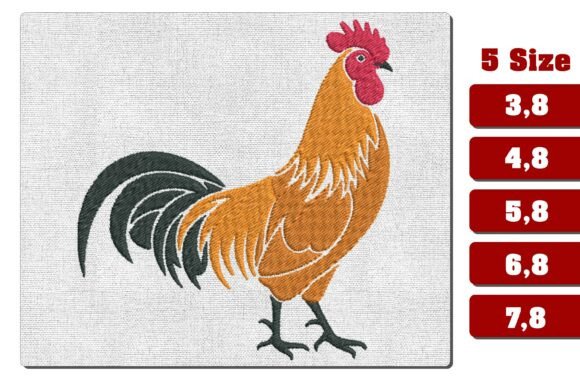
We’ve all seen generic rooster embroidery — flat, overly cartoonish, or so hyper‑realistic it snags threads and eats stabilizer. Majestic Rooster Farmhouse Embroidery sidesteps those problems. It leans into a decorative farmhouse aesthetic with clean linework, what appears to be a balanced mix of fills and satin columns, and a visual weight that makes it feel substantial without overwhelming the fabric. I immediately pictured it stitched in a warm, earthy thread palette: deep paprika orange, charcoal gray, antique gold, and touches of cream. The name itself suggests a proud, full‑chested bird with tail feathers that arc in a way that frames the design beautifully, even at the smallest offered size of 3.8 inches.
That smaller size matters more than many sellers realize. At 3.8 inches, this embroidery file can still breathe on a pocket corner, a baby bib insert, or a structured fabric pouch without detail loss — if, and this is a big if, the stitch density is well‑managed. Larger scale versions up to 7.8 inches let you go big on the back of a denim jacket, a farmhouse pillow cover, or the center of a canvas tote. The scaling possibility alone makes it a versatile machine embroidery design for a product line where you want cohesion: a matching rooster on an apron and the kitchen towel set, or a tote and a zip pouch that feel like a collection.
What Sells at a Craft Fair Booth — and How This Design Delivers
After years of setting up display tables, I’ve learned that weekend shoppers buy with their hands first. They touch the stitching, trace the outline with a fingertip, and hold the item up as if they’re already using it at home. That tactile experience is where Majestic Rooster Farmhouse Embroidery shines. Because it appears to use defined, well‑placed satin borders around major sections, the raised texture will catch light and create that “handmade quality” everyone’s after. When I run this on a natural cotton‑linen blend tea towel, I expect the rooster to stand just proud enough to feel luxurious but not so dense it warps the fabric after a wash.
Here’s my go‑to product list for a single design like this at a craft fair booth:
- Apron embroidery: A half apron with the rooster centered near the hem, or a full bib apron with the 7.8‑inch version on the chest. Farmhouse shoppers adore functional kitchen items that look curated.
- Tea towel embroidery: A flour sack towel with the 5.8‑inch rooster in one corner, paired with a simple stripe or gingham ribbon. Stack them in a wooden crate at your booth — they’ll move fast.
- Tote bag design: A natural canvas tote with the largest size, or a set of three mini market bags each sporting the 3.8‑inch accent on a pocket. Totes are impulse buys; a striking rooster seals the deal.
- Embroidered patch: Stitch on felt or twill, trim close, and add iron‑on backing. Sell them loose in a basket or stitch them onto plain caps. Patches are low‑risk, high‑margin handmade products.
- Pillow covers: A 16x16 inch cotton cover with the rooster as the focal point. Pair with a textured neutral background fabric so the thread colors sing.
- Small pouches: Canvas zipper bags with the 4.8‑inch design. Perfect for a “farmhouse essentials” gift display.
From a merchandising angle, Majestic Rooster Farmhouse Embroidery gives you a strong visual anchor. If you arrange your booth in color stories — say, olive green, mustard, and warm cream — this rooster ties the whole table together and reads as a cohesive small shop product line, not a random assortment.
Practical Production: Stitch‑Out Realities Every Seller Must Test
Nobody wants to discover density nightmares during batch production. When I evaluate a new hobby file for commercial embroidery or a busy Etsy seller’s inventory, I focus on how it will actually stitch on different substrates. For Majestic Rooster Farmhouse Embroidery, my advice is to test on scrap fabric immediately, before you invest in a dozen blank aprons.
Be mindful of dense stitch areas. Any rooster design with layered feathers can accumulate stitches in the neck and tail sections. If the embroidery file hasn’t been optimized, high‑density spots cause thread breaks, needle deflection, and puckering on lightweight linen. I recommend using a crisp, medium‑weight cutaway stabilizer on woven fabrics and a no‑show mesh on knits. For thick fabric like canvas totes or textured towels, a topper like water‑soluble film prevents stitches from sinking into the pile. This is especially important if you plan to stitch the largest size; a 7.8‑inch field covers a lot of real estate and demands stable hooping.
Tiny details and small lettering — if present — need careful scrutiny at the 3.8‑inch scale. If the design includes any fine lines or a subtle farmhouse sentiment in small text, stitch it at that exact size and view it from a foot away. If it blurs into a blob, you’ll lose the handmade crispness that commands a higher price. On dark fabric, contrast is everything. A rooster stitched in deep burgundy and navy on a black apron will disappear. Lay out your test stitch on both a natural ground and a charcoal ground to confirm the thread colors pop. I always snap a quick phone photo under the warm LED lights of my craft tent — that’s often how customers see the product first.
Photography and Etsy Listing Ready Appeal
A design’s sellability isn’t just about how it looks in person; it’s about how it photographs for online listings. Majestic Rooster Farmhouse Embroidery has a silhouette that reads instantly in a thumbnail, which is crucial for Etsy search results. An embroidered rooster on a textured fabric creates natural shadows and dimension that flat printed designs can’t match. I’d style mockups with simple props: a rolling pin, a sprig of rosemary, or a vintage‑looking ceramic mug. That farmhouse aesthetic plays straight into the Farm Animals product category and pulls in shoppers searching for rustic kitchen decor.
If you sell digital embroidery files, your listing needs to show the finished product. Create at least one real stitch‑out as a printable mockup. Hang a tea towel on a wooden hook, photograph it in natural light, and let the satin stitch catch a bit of sheen. That one image often converts a browser into a buyer. For finished product sellers, include a lifestyle shot of the tote carried at a farmers’ market. The rooster design immediately communicates handcrafted quality, not mass‑production.
Batch Production and Commercial Embroidery Considerations
When I’m running a design across twenty tote bags for a weekend market, repeatability is non‑negotiable. Majestic Rooster Farmhouse Embroidery needs to stitch out consistently without constant re‑threading or tension fiddling. From the title and description, I’m confident this is a standalone motif, not an edge‑to‑edge pattern, which makes positioning straightforward. You can hoop each blank, center the rooster, and go. That saves enormous time compared to continuous border designs that require precise alignment.
Thread changes will dictate your workflow. If the design uses multiple colors, batch them: stitch all color one across every unit, then switch to color two. This keeps your rhythm and reduces thread waste. I’d estimate at least three to five thread colors for a majestic rooster, so plan your pre‑wound bobbins and test color blending on a scrap. If the design includes shading that relies on the fabric showing through, choose a fabric with a tight weave so those gaps look intentional, not sparse.
As with any embroidery file you plan to sell finished products from, verify commercial licensing before you touch your machine. Even though the design comes in multiple sizes and clearly targets crafters, some digital sellers restrict finished goods. I always double‑check the designer’s terms. Nothing stings more than a beautiful booth display built on assets you can’t legally sell. The product description says “available sizes: 3.8 in, 4.8 in, 5.8 in, 6.8 in, 7.8 in” — so it’s sized to cover most projects, but you need to confirm the hoop dimensions required for each size before you invest in specialty blanks like curved caps or thick‑handled totes. Curved cap surfaces, in particular, need a smaller, well‑digitized design; this rooster might be best left for flat embroidery unless you intentionally downsize and test on a cap frame.
Booth Display and Customer Engagement
Imagine walking through a busy craft fair. A rooster embroidery, beautifully stitched on a rustic linen backdrop, is a natural conversation starter. I can already hear shoppers say, “My grandma would love this,” or “That reminds me of our farm.” Majestic Rooster Farmhouse Embroidery taps into nostalgia without being outdated. Hang your finished tea towels on a vintage‑style drying rack, clip aprons on a jute line with miniature clothespins, and lean a framed pillow cover against a wooden easel. This design pulls people into your booth from five feet away, and once they’re close, the stitching quality sells the handmade product premium.
If you offer personalization, this rooster pairs wonderfully with a farm name or a simple “est. [year]” stitched nearby. Position the monogram where it doesn’t compete, perhaps on a pocket or opposite corner. That upselling opportunity increases your per‑item value and gives repeat customers a reason to come back.
Final Designer Notes Before You Stitch for Profit
Every embroidery machine behaves a little differently, and your fabric stash is unique. My professional habit: never run a new design on a final product first thing. Here’s a quick checklist I use for a design like Majestic Rooster Farmhouse Embroidery:
- Test on scrap fabric — match the actual blank you’ll use in production.
- Check thread contrast — especially tail feather highlights against mid‑tones.
- Review spacing — ensure satin stitches don’t trap bobbin thread or leave gaps.
- Confirm hoop size — the 3.8‑inch variant may fit a 4x4 hoop, but larger sizes will need at least 5x7 or 6x10; verify before you commit to a bulk order of compact blanks.
- Inspect stitch density — look for puckering on lightweight fabric; if needed, add an extra layer of stabilizer.
- Create a real mockup — one finished sample to photograph and to keep at your booth table as proof of quality.
- Compare fabric colors — stitch on white, natural, chambray blue, and a dark gray; decide your hero colorway.
- Review commercial licensing — never assume. Even if the product listing says “commercial embroidery,” read the fine print.
This design’s presence in the Farm Animals category and its Embroidery product type mean it was born for the kind of market where handmade, heartfelt goods still win. Whether you’re an Etsy seller expanding your farmhouse collection, a boutique maker curating a seasonal line, or a craft fair regular testing a new centerpiece design, Majestic Rooster Farmhouse Embroidery delivers a confident, sellable motif that turns simple blanks into memorable finished products. Stitch it wisely, display it proudly, and watch it anchor your booth all market long.